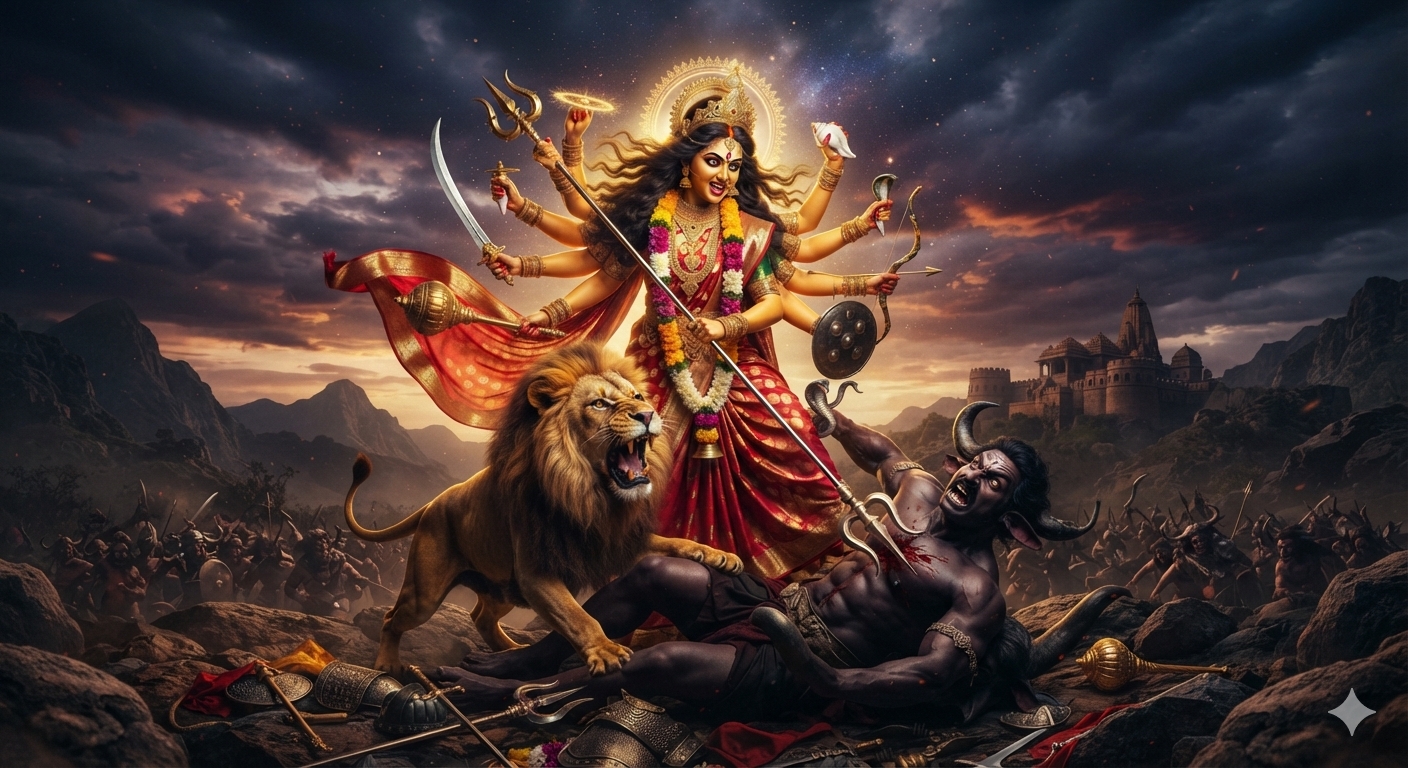
Kolkata: As autumn arrives, India immerses itself in celebrations dedicated to divine feminine power. While many parts of the country observe Navratri through fasting, Garba, Dandiya and Ramlila, Durga Puja in Bengal offers a distinctive blend of devotion, family sentiment, social harmony and artistic expression. More than a religious festival, it has evolved into a massive public celebration that brings together communities through creativity and shared cultural traditions.
The uniqueness of Bengal’s Durga Puja lies in the way Goddess Durga is perceived. While religious traditions portray her as Mahishasuramardini, the powerful slayer of Mahishasura, Bengali culture also celebrates her as Uma, the beloved married daughter who returns to her parental home from Mount Kailash for a brief annual visit. Her children—Lakshmi, Saraswati, Kartikeya and Ganesha—accompany her, giving the festival an intimate, familial character.

The autumnal worship is traditionally associated with Akal Bodhan, or the invocation of the goddess at an unconventional time. According to popular mythology, Lord Rama worshipped Durga during autumn before his battle against Ravana. The festivities begin with Mahalaya, when the recitation of Chandi Path, famously associated with Birendra Krishna Bhadra’s voice, marks the spiritual beginning of the celebrations. In Kolkata’s Kumartuli, artisans also prepare the idols, with the ritual of Chakshudaan, or the ceremonial painting of the goddess’s eyes, carrying special significance.
Historically, Durga Puja was largely organised by affluent families and zamindars as a private celebration known as Barir Puja. Over time, community-led Barowari and public celebrations expanded its reach, transforming the festival into a collective civic event. Today, people from different social and economic backgrounds participate in its organisation and festivities.
In contemporary Bengal, Durga Puja has become an extraordinary showcase of art and craftsmanship. Kolkata’s streets transform into expansive open-air galleries, with elaborately designed pandals inspired by architecture, historical monuments, folk traditions and contemporary social themes. Artists, sculptors, lighting specialists and local craftspeople work for months to create these installations, attracting enormous crowds throughout the celebrations.

Food and traditional performances add to the festival’s distinctive character. The bhog served during the celebrations often includes khichuri, labra and an assortment of sweets, distributed among devotees and visitors. The energetic dhunuchi naach, performed to the rhythmic beats of the dhak while holding smoking earthen vessels, is another highlight of Bengal’s festive culture.
The celebrations conclude on Vijayadashami with an emotional farewell to the goddess. During Sindoor Khela, married women apply vermilion to the goddess and one another, symbolising auspiciousness, affection and solidarity. The subsequent immersion of the idols is accompanied by calls of “Aschhe bochhor abar hobe”—the celebrations will return next year.
In 2021, UNESCO inscribed Kolkata’s Durga Puja on its Representative List of the Intangible Cultural Heritage of Humanity, recognising its distinctive cultural and community significance.
Ultimately, Bengal’s Durga Puja transcends the boundaries of religious ritual. By combining devotion with artistic innovation, community participation and deep familial affection, it celebrates a cultural tradition in which the mighty goddess is also a cherished daughter, and faith becomes a shared expression of humanity.